
Buy Peptides in Canada: The Complete Guide for Researchers (2026)
Why Buy Research Peptides from a Canadian Supplier?
If you are conducting peptide research in Canada, sourcing compounds domestically offers significant advantages over ordering from international vendors. Canadian suppliers ship via Canada Post with tracked delivery, eliminating the customs delays, import seizures, and extended transit times that come with cross-border orders.
Domestic shipping typically arrives within 2-5 business days. International orders from US or overseas suppliers can take 2-4 weeks — and there is always a risk that packages are held or returned at the border.
Beyond shipping speed, buying from a Canadian vendor means your supplier operates under Canadian consumer protection laws, handles your payment in Canadian dollars, and provides local customer support when you need it.
What to Look for in a Canadian Peptide Vendor
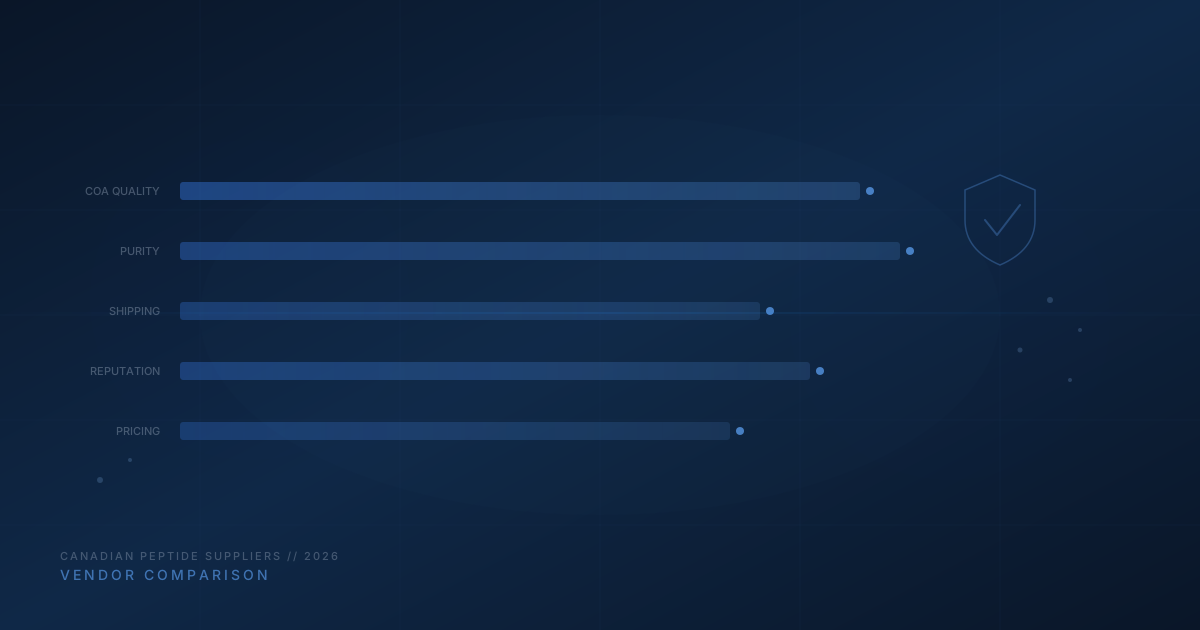
Not all peptide suppliers are equal. The Canadian market includes vendors ranging from rigorously tested, transparent operations to resellers with unknown supply chains and no quality documentation. Here is what separates a trustworthy vendor from a questionable one.
Third-Party Certificates of Analysis (COAs)
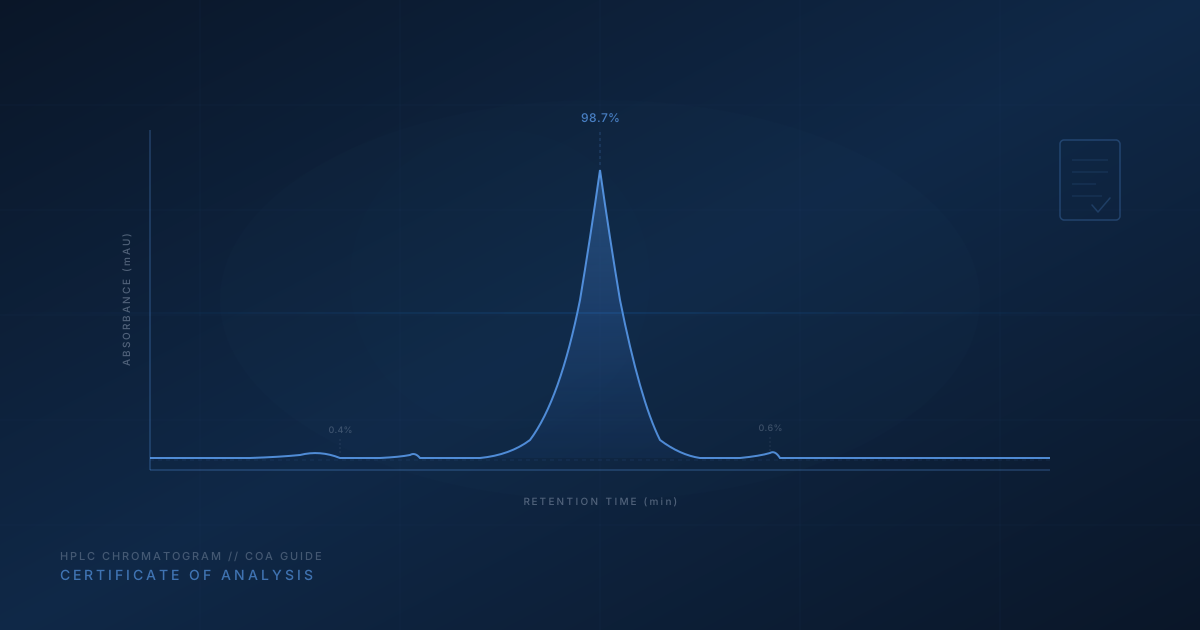
A Certificate of Analysis is the single most important document when evaluating a peptide supplier. A legitimate COA should include:
- HPLC (High-Performance Liquid Chromatography) purity results — showing the compound's purity percentage
- Mass Spectrometry (MS) confirmation — verifying the molecular identity of the compound
- Batch/lot number — linking the COA to a specific production batch
- Test date — confirming the analysis is recent
- Testing laboratory name — ideally an independent, third-party lab rather than the vendor's own facility
If a vendor cannot provide a batch-specific COA for the product you are purchasing, that is a serious red flag. Generic or undated COAs may not correspond to the actual product in your order.
Purity Standards
Research-grade peptides should meet a minimum purity threshold of 98% as measured by HPLC. This is the standard accepted by most research institutions and peer-reviewed publications.
Peptides below 95% purity may contain synthesis byproducts, truncated sequences, or degradation products that can introduce variables into experimental results. For any serious research application, 98%+ purity is the baseline expectation.
Transparent Business Practices
A trustworthy Canadian peptide vendor will have:
- A clearly stated Canadian business address
- Published contact information (email, phone, or contact form)
- A professional website with detailed product information
- Published COAs accessible on each product page
- Clear shipping, refund, and privacy policies
- "For research purposes only" disclaimers on all products
Payment and Ordering
Canadian peptide vendors typically accept Interac e-Transfer, which is the standard Canadian payment method that avoids international processing fees. Some vendors also accept cryptocurrency or credit cards.
Look for vendors that provide order tracking, shipping confirmation emails, and clear communication throughout the fulfillment process.
Popular Research Peptides in Canada
The Canadian research community has focused interest in several well-studied peptide compounds. Here are the most commonly sourced research peptides and why they attract scientific attention.
BPC-157 (Body Protection Compound-157)
BPC-157 is a synthetic pentadecapeptide consisting of 15 amino acids. It is derived from a protein found in human gastric juice and has been the subject of extensive laboratory research. Published studies have examined BPC-157 in cell culture and animal model systems across multiple experimental frameworks, with particular attention to its interactions with nitric oxide pathways and angiogenesis markers.
BPC-157 is the most frequently searched research peptide in Canada, and most vendors carry it as a core catalog item.
TB-500 (Thymosin Beta-4 Fragment)
TB-500 is a synthetic peptide based on a segment of Thymosin Beta-4, a naturally occurring protein involved in cellular processes. Research has explored TB-500 in tissue repair models and cell migration assays. It is often studied alongside BPC-157 in complementary research protocols.
Semaglutide
Semaglutide is a GLP-1 receptor agonist that has attracted massive research interest due to its role in metabolic studies. It is one of the most in-demand research compounds globally, and Canadian researchers increasingly seek domestic sources to avoid import complications.
CJC-1295 and Ipamorelin
These growth hormone secretagogue peptides are frequently studied in combination. CJC-1295 is a modified growth hormone releasing hormone (GHRH) analog, while Ipamorelin is a selective growth hormone secretagogue. Together, they represent one of the most commonly researched peptide stacks.
GHK-Cu (Copper Peptide)
GHK-Cu is a naturally occurring tripeptide with a copper ion attachment. Research has examined its role in skin biology, wound healing models, and collagen synthesis pathways. It is popular among researchers studying dermatological applications.
How to Verify Peptide Quality
Beyond checking the COA, there are several practical steps you can take to verify the quality of your research peptides.
Visual Inspection
Lyophilized (freeze-dried) peptides should appear as a white to off-white powder or cake at the bottom of the vial. Discoloration (yellow, brown, or unusual coloring) may indicate degradation or contamination.
Storage on Arrival
Upon receiving your peptides, store them according to the vendor's recommendations — typically at -20°C for long-term storage of unreconstituted peptides. Proper storage maintains stability and extends the usable life of the compound.
Independent Testing
For critical research applications, consider sending a sample to an independent analytical laboratory for verification. While this adds cost, it provides complete certainty about what you are working with. Many Canadian analytical labs offer HPLC and MS testing services.
Shipping and Delivery in Canada
Canadian peptide vendors ship via Canada Post to all provinces and territories. Typical delivery timelines:
| Region | Estimated Delivery | |--------|-------------------| | Ontario / Quebec | 2-4 business days | | British Columbia / Alberta | 3-5 business days | | Manitoba / Saskatchewan | 3-5 business days | | Atlantic provinces | 4-6 business days | | Northern territories | 5-8 business days |
Most vendors provide tracking numbers and ship orders within 1-2 business days after payment confirmation. All shipments within Canada avoid customs processing entirely, which is the primary advantage over international ordering.
Legal Considerations for Peptides in Canada
Peptide research chemicals occupy a specific regulatory space in Canada. Key points for researchers:
- Research peptides are not scheduled substances under the Controlled Drugs and Substances Act (CDSA). Commonly studied compounds like BPC-157, TB-500, GHK-Cu, and CJC-1295 are legal to purchase for research purposes.
- Peptides sold "for research purposes only" are not classified as drugs, food, or cosmetics under the Food and Drugs Act, provided they are not marketed with therapeutic claims.
- Health Canada enforcement targets vendors who make health claims or market peptides for human consumption. Vendors maintaining strict "research use only" positioning operate within the established regulatory framework.
- Purchasers must be 18 years of age or older and acknowledge that products are intended for laboratory and research use only.
Always ensure your vendor includes appropriate research-use disclaimers and does not make therapeutic claims about their products.
What Makes PinPoint Different
PinPoint Peptides was built specifically for Canadian researchers who demand transparency and verified quality.
- Every batch is third-party tested to 98%+ purity via HPLC and confirmed by Mass Spectrometry
- COAs are published on every product page — not hidden behind support tickets
- Canadian owned and operated — all shipping, support, and operations are domestic
- Fast shipping via Canada Post with tracking on every order
- No customs risk — domestic shipping eliminates border delays and seizures
Summary
When buying research peptides in Canada, prioritize vendors who publish batch-specific COAs, maintain 98%+ purity standards, ship domestically via Canada Post, and operate transparently with clear business information and research-use disclaimers. Domestic sourcing eliminates customs risk, reduces delivery times, and ensures you are working with a supplier accountable under Canadian law.
All products sold by PinPoint Peptides are strictly for laboratory and research purposes only. Not for human consumption.
Related Resources
Written by
PinPoint Research Team
Research editors — PinPoint Peptides, Canada
The PinPoint Research Team is a collective of Canadian contributors focused on translating peer-reviewed peptide science into clear, accurate reference material for the research community. Every article is written with direct reference to primary literature, cross-checked against batch Certificates of Analysis, and reviewed for compliance with Canadian regulatory standards before publication.