HGH Fragment 176-191: Lipolytic Domain Research
Apr 12, 2026·4 min read
Background
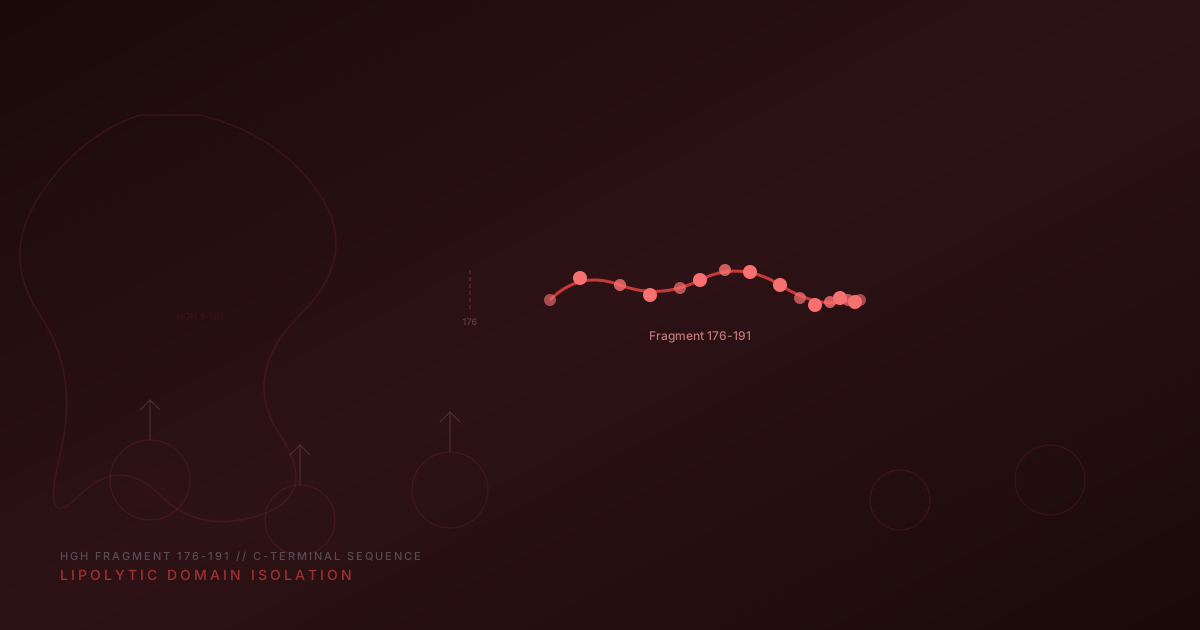
HGH Fragment 176-191 is a synthetic peptide corresponding to amino acid residues 176 through 191 of the C-terminal region of human growth hormone (hGH). This 16-amino acid sequence was identified as the minimal domain responsible for the lipolytic (fat-mobilizing) activity of the full-length growth hormone molecule. The fragment retains the lipid metabolism properties of intact hGH without the growth-promoting effects mediated through the classical GH receptor.
Research interest in this domain arose from the observation that while intact growth hormone exerts multiple biological effects — including stimulation of linear growth, modulation of carbohydrate metabolism, and effects on lipid metabolism — the lipolytic activity appeared to be structurally separable from the other functions. This led to the synthesis and characterization of the C-terminal fragment as a research tool for studying fat metabolism pathways.
Lipid Metabolism Studies
The foundational preclinical work on hGH Fragment 176-191 was conducted by Heffernan et al. (2000), published in the American Journal of Physiology — Endocrinology and Metabolism. This study examined the oral administration of a synthetic fragment of human growth hormone (designated AOD-9401) in obese (ob/ob) C57BL/6J mice over a 30-day treatment period. The researchers reported that body weight gain in treated animals was significantly lower than that of saline-treated controls from day 16 onward. Ex vivo analysis of adipose tissue from treated animals revealed reduced lipogenic activity and increased lipolytic activity.
Subsequent research by Ng et al. (2000), published in Obesity Research, examined the metabolic properties of a modified version of the fragment designated AOD-9604, in which the C-terminal tyrosine residue was substituted with phenylalanine to improve stability. In obese Zucker rats, daily oral treatment with AOD-9604 at 500 micrograms per kilogram body weight for 19 days reduced body weight gain by over 50% compared to controls, and adipose tissue from treated animals showed increased lipolytic activity.
Beta-3 Adrenergic Receptor Mechanism
Further investigation into the mechanism of action was published by Heffernan et al. (2001) in Endocrinology. This study examined the lipolytic fragment in both normal obese mice and beta-3 adrenergic receptor (beta3-AR) knockout mice. The researchers reported that the fragment's effects on lipid metabolism were abolished in beta3-AR knockout animals, indicating that the lipolytic activity is dependent on signaling through the beta-3 adrenergic receptor pathway.
This finding was significant because it distinguished the fragment's mechanism of action from that of intact growth hormone, which acts through the GH receptor. The fragment does not bind the classical GH receptor, as confirmed in receptor binding assays. This mechanistic dissociation explains why the fragment retains lipolytic properties without the growth-promoting or insulin-modulating effects of the full-length hormone.
Distinction from Intact Growth Hormone
An important observation reported across multiple studies is that chronic treatment with the C-terminal fragment did not produce the adverse effects on insulin sensitivity that are associated with chronic administration of intact growth hormone. Heffernan et al. (2001) specifically noted that the fragment did not impair glucose homeostasis in treated animals, in contrast to intact hGH, which induced measurable insulin resistance under similar chronic treatment protocols.
Laboratory Handling Notes
HGH Fragment 176-191 is supplied as a lyophilized powder and should be stored at -20°C prior to reconstitution. The peptide should be reconstituted in sterile bacteriostatic water for research use. Researchers should consult the Certificate of Analysis for purity specifications.
All findings discussed in this article are derived from peer-reviewed preclinical investigations. This compound is intended for research applications only.
References
- Heffernan, M.A., et al. "Effects of oral administration of a synthetic fragment of human growth hormone on lipid metabolism." American Journal of Physiology — Endocrinology and Metabolism 279.3 (2000): E501-E507.
- Ng, F.M., et al. "Metabolic studies of a synthetic lipolytic domain (AOD9604) of human growth hormone." Obesity Research 8.suppl 1 (2000): 91S.
- Heffernan, M.A., et al. "The effects of human GH and its lipolytic fragment (AOD9604) on lipid metabolism following chronic treatment in obese mice and beta(3)-AR knock-out mice." Endocrinology 142.12 (2001): 5182-5189.
- Ng, F.M., et al. "Increase of fat oxidation and weight loss in obese mice caused by chronic treatment with human growth hormone or a modified C-terminal fragment." International Journal of Obesity 25.10 (2001): 1442-1449.