GHK-Cu: Copper Peptide Research in Tissue Remodeling
Apr 10, 2026·4 min read
Background
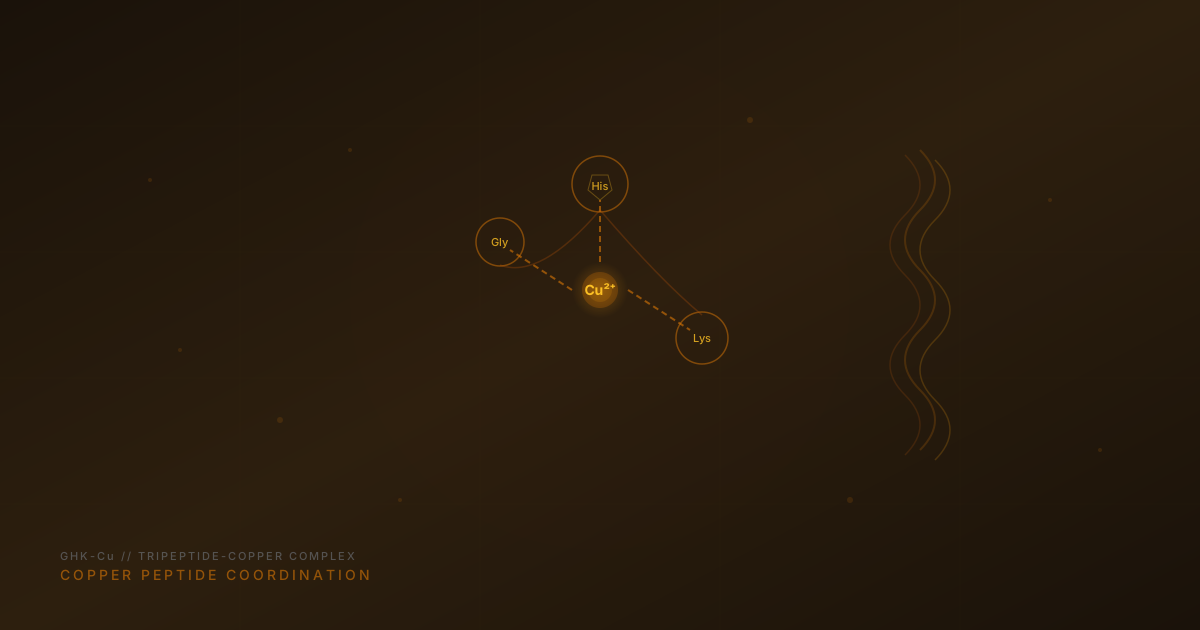
GHK-Cu (glycyl-L-histidyl-L-lysine copper(II)) is a naturally occurring tripeptide-copper complex first isolated from human plasma by Pickart and Thayer in 1973. The molecule consists of three amino acids — glycine, histidine, and lysine — coordinated with a copper(II) ion. It is found in human plasma, saliva, and urine, with plasma levels declining measurably with age.
Since its initial isolation, GHK-Cu has become one of the most extensively studied copper peptide complexes in the peer-reviewed literature, with research spanning cell biology, dermatology, and molecular biology disciplines. Its well-defined molecular structure (molecular weight ~403 Da) and commercial availability as a lyophilized research reagent have made it accessible to laboratories worldwide.
Collagen Synthesis and Extracellular Matrix
The foundational work on GHK-Cu's interaction with extracellular matrix components was published by Maquart et al. in FEBS Letters (1988). This study demonstrated that the tripeptide-copper complex stimulated collagen synthesis in fibroblast cultures, with measurable effects observed at concentrations as low as 10⁻¹² M and maximal stimulation at 10⁻⁹ M. The effect was independent of changes in cell number, suggesting a direct influence on biosynthetic activity rather than proliferation.
Subsequent in vitro investigations by Siméon et al. (2000), published in the Journal of Investigative Dermatology, extended these findings to glycosaminoglycan and proteoglycan expression. Using dermal fibroblast cultures, the researchers observed that GHK-Cu modulated the expression of decorin and other small proteoglycans involved in extracellular matrix organization.
Gene Expression Studies
More recent research has examined GHK-Cu's effects at the transcriptomic level. Pickart and Margolina (2018), publishing in the International Journal of Molecular Sciences, analyzed the Broad Institute's Connectivity Map data to characterize gene expression changes associated with GHK treatment. Their analysis identified effects on genes involved in multiple biological processes, including those related to antioxidant defense, DNA repair pathways, and extracellular matrix remodeling.
This gene expression data suggests that GHK-Cu's laboratory-observed effects may extend beyond simple collagen stimulation. The compound was found to influence the expression of genes in pathways related to ubiquitin-proteasome activity and several signaling cascades, though these observations derive from in vitro experimental systems and computational analysis of gene expression databases.
Wound Model Studies
Laboratory wound models have provided another experimental framework for GHK-Cu research. Studies using standardized in vitro wound closure assays and animal model systems have documented the compound's effects on processes relevant to tissue repair, including fibroblast migration, angiogenesis-related markers, and inflammatory mediator expression.
Research by Pickart (2008), published in the Journal of Biomaterials Science, Polymer Edition, reviewed evidence from multiple experimental systems suggesting that GHK-Cu influenced tissue remodeling processes in skin, connective tissue, and other organ systems in controlled laboratory settings. These observations were obtained using established experimental methodologies including cell culture assays, histological analysis, and gene expression profiling.
Laboratory Handling Notes
GHK-Cu is supplied as a lyophilized powder with a characteristic blue-green color due to the copper(II) ion. The compound should be stored desiccated at -20°C and reconstituted in sterile water or appropriate buffer immediately prior to use. Researchers should verify purity and copper content via the Certificate of Analysis provided with each lot.
All findings discussed in this article are derived from peer-reviewed laboratory investigations. This compound is intended for research applications only and must be handled in accordance with institutional laboratory safety protocols.
References
- Maquart, F.X., et al. "Stimulation of collagen synthesis in fibroblast cultures by the tripeptide-copper complex glycyl-L-histidyl-L-lysine-Cu2+." FEBS Letters 238.2 (1988): 343-346.
- Siméon, A., et al. "Expression of glycosaminoglycans and small proteoglycans in wounds: modulation by the tripeptide-copper complex glycyl-L-histidyl-L-lysine-Cu(2+)." Journal of Investigative Dermatology 115.6 (2000): 962-968.
- Pickart, L., Margolina, A. "Regenerative and Protective Actions of the GHK-Cu Peptide in the Light of the New Gene Data." International Journal of Molecular Sciences 19.7 (2018): 1987.
- Pickart, L. "The human tri-peptide GHK and tissue remodeling." Journal of Biomaterials Science, Polymer Edition 19.8 (2008): 969-988.