
Semaglutide: GLP-1 Receptor Agonist Clinical Research
Apr 8, 2026·4 min read
Background
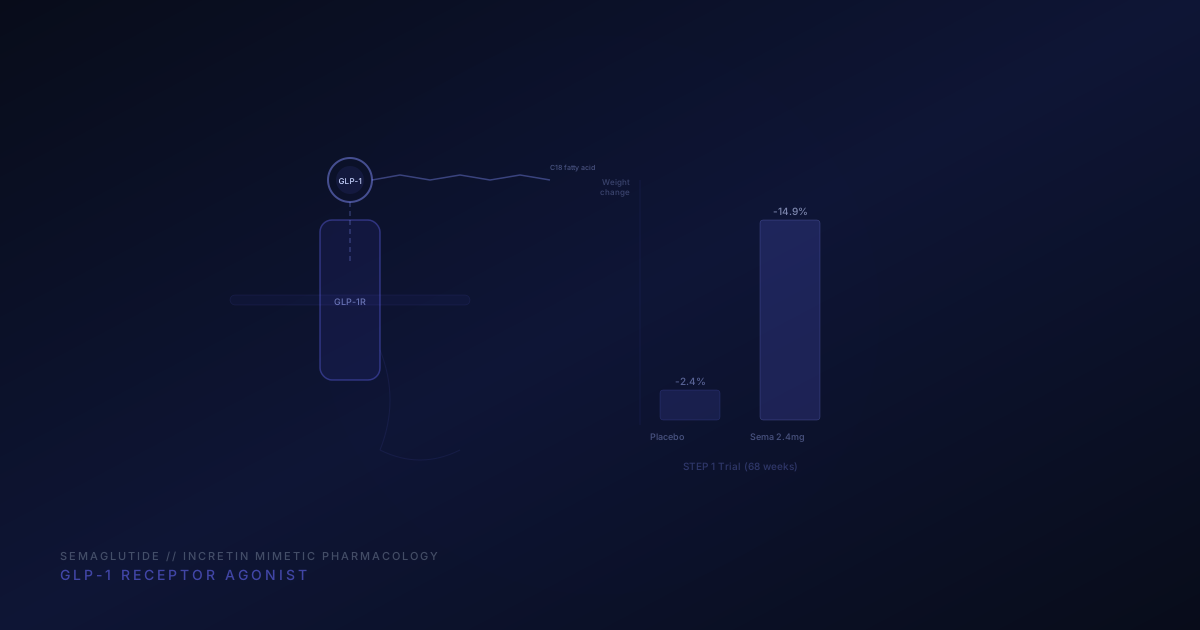
Semaglutide is a synthetic analog of human glucagon-like peptide-1 (GLP-1), a 30-amino acid incretin hormone secreted by intestinal L-cells in response to nutrient ingestion. The compound was engineered with specific amino acid substitutions and a C-18 fatty di-acid chain that enables binding to serum albumin, extending the plasma half-life to approximately 7 days and permitting once-weekly administration.
GLP-1 receptors are expressed in multiple tissues including pancreatic beta cells, the gastrointestinal tract, and specific regions of the central nervous system including the hypothalamus and brainstem. The receptor is a class B G protein-coupled receptor that signals primarily through the Gs-cAMP-PKA pathway.
Semaglutide has been evaluated in one of the largest clinical trial programs in metabolic research, with results published in multiple peer-reviewed journals.
STEP 1 Trial Results
The pivotal STEP 1 (Semaglutide Treatment Effect in People with Obesity) trial was published by Wilding et al. (2021) in the New England Journal of Medicine. This randomized, double-blind, placebo-controlled trial enrolled 1,961 adults with a body-mass index of 30 or greater (or 27 or greater with at least one weight-related comorbidity) who did not have diabetes.
Participants were randomly assigned in a 2:1 ratio to receive once-weekly subcutaneous semaglutide (2.4 mg) or placebo for 68 weeks, with both groups receiving lifestyle intervention. The primary endpoint was percent change in body weight from baseline.
The study reported a mean body weight change of -14.9% in the semaglutide group compared with -2.4% in the placebo group, yielding an estimated treatment difference of -12.4 percentage points (95% CI, -13.4 to -11.5; P<0.001). Of participants in the semaglutide group, 86.4% achieved at least 5% weight loss, and 69.1% achieved at least 10% weight loss.
Gastrointestinal adverse events were the most commonly reported side effects, leading to treatment discontinuation in 4.5% of the semaglutide group versus 0.8% of the placebo group.
STEP 2 Trial in Type 2 Diabetes
Davies et al. (2021), also publishing in the New England Journal of Medicine, reported results of the STEP 2 trial, which evaluated semaglutide in adults with overweight or obesity and type 2 diabetes. This trial compared semaglutide 2.4 mg, semaglutide 1.0 mg, and placebo, all administered once weekly for 68 weeks alongside lifestyle intervention.
The study enrolled 1,210 participants and reported mean body weight changes of -9.6% with semaglutide 2.4 mg, -7.0% with semaglutide 1.0 mg, and -3.4% with placebo. HbA1c reductions were also documented across both semaglutide dose groups compared with placebo.
Cardiovascular Outcomes (SELECT Trial)
Lincoff et al. (2023), publishing in the New England Journal of Medicine, reported results of the SELECT (Semaglutide Effects on Cardiovascular Outcomes in People with Overweight or Obesity) trial. This was a randomized, double-blind, placebo-controlled event-driven trial enrolling 17,604 adults aged 45 years or older with overweight or obesity and established cardiovascular disease, without diabetes.
The trial reported that semaglutide 2.4 mg administered weekly reduced the risk of the primary composite cardiovascular endpoint (cardiovascular death, nonfatal myocardial infarction, or nonfatal stroke) by 20% compared with placebo (hazard ratio, 0.80; 95% CI, 0.72 to 0.90; P<0.001) over a mean follow-up of 39.8 months.
Mechanism of Action
Semaglutide's pharmacological effects are mediated through activation of the GLP-1 receptor. In the pancreas, this promotes glucose-dependent insulin secretion. In the central nervous system, GLP-1 receptor activation in the hypothalamus and brainstem influences appetite regulation and satiety signaling. The glucose-dependent nature of the insulin secretory response means the compound carries a low intrinsic risk of hypoglycemia when used without concomitant insulin or sulfonylurea therapy, as documented across the STEP trial program.
Research Classification
All findings discussed in this article are derived from peer-reviewed clinical trial publications. Semaglutide is an approved pharmaceutical agent in multiple jurisdictions. Research-grade semaglutide peptide is intended for laboratory applications only and must be handled in accordance with institutional protocols.
References
- Wilding, J.P.H., et al. "Once-weekly semaglutide in adults with overweight or obesity." New England Journal of Medicine 384.11 (2021): 989-1002.
- Davies, M., et al. "Semaglutide 2.4 mg once a week in adults with overweight or obesity, and type 2 diabetes (STEP 2): a randomised, double-blind, double-dummy, placebo-controlled, phase 3 trial." The Lancet 397.10278 (2021): 971-984.
- Lincoff, A.M., et al. "Semaglutide and cardiovascular outcomes in obesity without diabetes." New England Journal of Medicine 389.24 (2023): 2221-2232.
- Drucker, D.J. "Mechanisms of action and therapeutic application of glucagon-like peptide-1." Cell Metabolism 27.4 (2018): 740-756.