CJC-1295: Growth Hormone-Releasing Hormone Analog Research
Mar 28, 2026·4 min read
Background
CJC-1295 is a synthetic analog of growth hormone-releasing hormone (GHRH) consisting of the first 29 amino acids of the native GHRH sequence with four amino acid substitutions designed to improve metabolic stability. The compound was developed to address the inherent limitation of native GHRH, which has a plasma half-life of less than 10 minutes due to rapid enzymatic degradation by dipeptidyl peptidase IV (DPP-IV).
Two forms of CJC-1295 have been investigated in published research: CJC-1295 with Drug Affinity Complex (DAC), which uses a maleimido derivative to bind serum albumin and extend circulating half-life, and Modified GRF(1-29), the non-DAC version with shorter duration of action. Both variants retain affinity for the GHRH receptor on anterior pituitary somatotroph cells.
The compound's rational design — modifying specific residues to resist DPP-IV cleavage while maintaining receptor binding — exemplifies modern peptide engineering approaches that are well-documented in the endocrinology literature.
Pharmacokinetic Studies
The pivotal pharmacokinetic study on CJC-1295 was published by Teichman et al. (2006) in the Journal of Clinical Endocrinology & Metabolism. This clinical investigation in healthy adult subjects demonstrated that a single subcutaneous injection of CJC-1295 (with DAC) produced dose-dependent increases in mean plasma growth hormone concentrations by 2- to 10-fold, sustained for 6 days or more. Plasma IGF-I concentrations increased by 1.5- to 3-fold and remained elevated for 9 to 11 days following a single administration.
The study determined an estimated half-life of 5.8 to 8.1 days for CJC-1295 with DAC, representing a substantial extension compared to the minutes-long half-life of native GHRH. This prolonged pharmacokinetic profile was attributed to the albumin-binding Drug Affinity Complex technology.
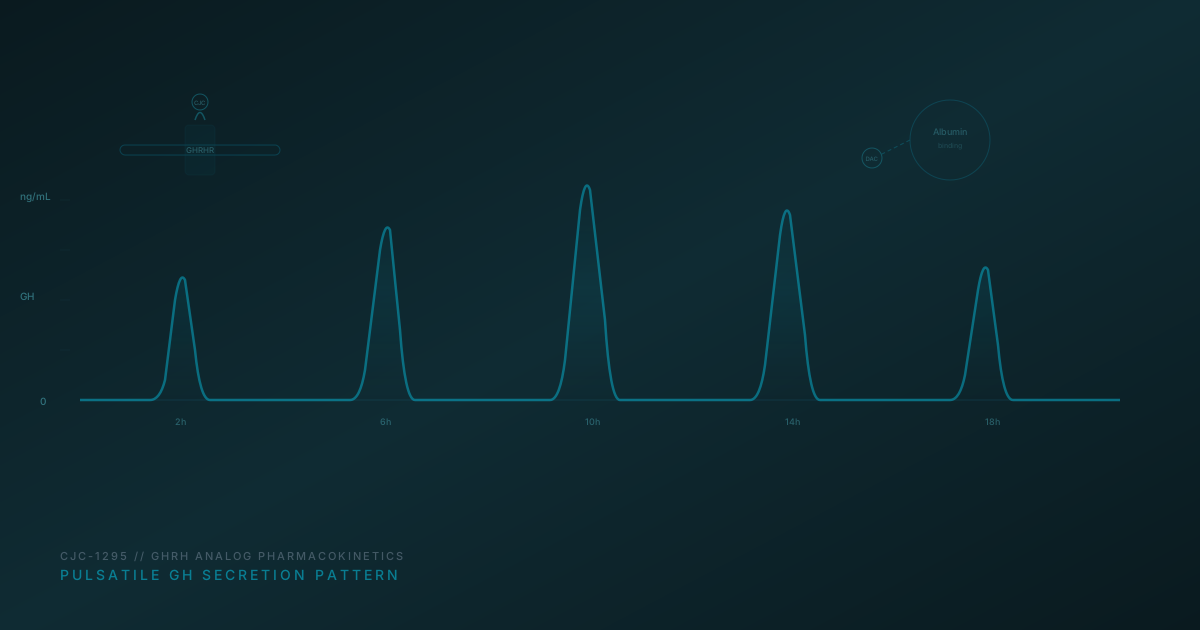
Notably, the study reported that growth hormone release maintained its pulsatile physiological pattern despite the continuous presence of the GHRH analog. This observation was further characterized in a subsequent publication by the same research group, which demonstrated that CJC-1295 amplified GH pulse amplitude without disrupting the underlying pulsatile secretory rhythm.
Pituitary Receptor Interaction
The mechanism of action of CJC-1295 centers on its interaction with the GHRH receptor (GHRHR), a class B G protein-coupled receptor expressed on anterior pituitary somatotroph cells. Upon receptor binding, the GHRH analog activates adenylyl cyclase through Gs-protein coupling, leading to increased intracellular cyclic AMP levels and subsequent growth hormone gene transcription and secretion.
Research on the GHRH/GHRHR signaling axis, reviewed by Frohman and Kineman (2002) in Trends in Endocrinology & Metabolism, has established that this pathway is a primary regulator of pulsatile growth hormone secretion. The extended receptor occupancy provided by CJC-1295's prolonged half-life results in sustained activation of this signaling cascade in a manner that differs kinetically from native GHRH stimulation.
Laboratory studies using pituitary cell cultures have characterized the dose-response relationship and receptor binding kinetics of modified GHRH analogs, providing mechanistic context for the clinical pharmacokinetic observations.
IGF-I Axis Effects
The sustained elevation of IGF-I concentrations observed in clinical studies represents an important aspect of CJC-1295 research. IGF-I is the primary mediator of growth hormone's peripheral effects, synthesized predominantly in the liver in response to GH receptor activation. The prolonged IGF-I elevation documented by Teichman et al. is consistent with sustained hepatic GH receptor stimulation from the amplified GH secretory pattern.
Alba et al. (2006), publishing in the American Journal of Physiology — Endocrinology and Metabolism, demonstrated that daily administration of CJC-1295 normalized growth parameters in GHRH knockout mice, providing preclinical evidence that the analog functionally replaces native GHRH signaling through the same receptor pathway.
Laboratory Handling Notes
CJC-1295 is supplied as a lyophilized powder and should be stored at -20°C prior to reconstitution. The peptide should be reconstituted in sterile bacteriostatic water and used within the timeframe specified in the stability data provided with each lot. Due to its albumin-binding properties (DAC variant), researchers should consider protein binding effects when designing in vitro assay protocols.
All findings discussed in this article are derived from peer-reviewed clinical and preclinical investigations. This compound is intended for research applications only.
References
- Teichman, S.L., et al. "Prolonged stimulation of growth hormone (GH) and insulin-like growth factor I secretion by CJC-1295, a long-acting analog of GH-releasing hormone, in healthy adults." Journal of Clinical Endocrinology & Metabolism 91.3 (2006): 799-805.
- Frohman, L.A., Kineman, R.D. "Growth hormone-releasing hormone and pituitary development, hyperplasia and tumorigenesis." Trends in Endocrinology & Metabolism 13.7 (2002): 299-303.
- Alba, M., et al. "Once-daily administration of CJC-1295, a long-acting growth hormone-releasing hormone (GHRH) analog, normalizes growth in the GHRH knockout (GHRHKO) mouse." American Journal of Physiology — Endocrinology and Metabolism 291.6 (2006): E1290-E1294.
- Ionescu, M., Bhatt, D.L. "Pulsatile secretion of growth hormone (GH) persists during continuous stimulation by CJC-1295, a long-acting GH-releasing hormone analog." Journal of Clinical Endocrinology & Metabolism 91.12 (2006): 4792-4797.