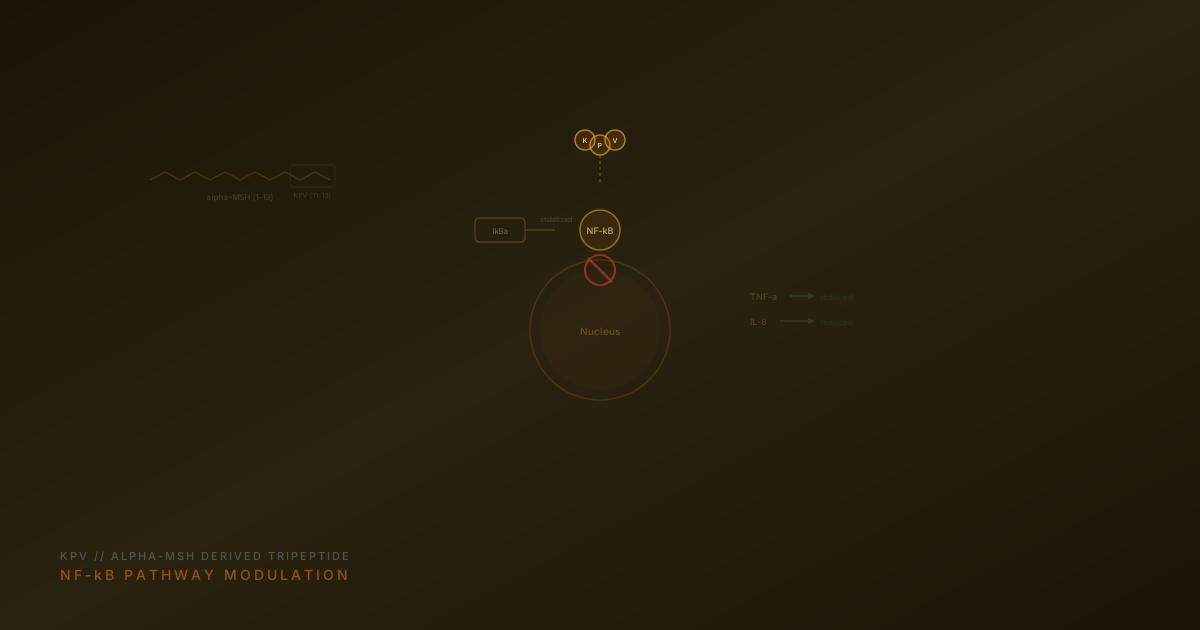
KPV: Alpha-MSH Derived Anti-Inflammatory Tripeptide Research
Mar 12, 2026·4 min read
Background
KPV (Lys-Pro-Val) is a tripeptide corresponding to the C-terminal amino acid residues 11-13 of alpha-melanocyte-stimulating hormone (alpha-MSH), a 13-amino acid neuropeptide derived from proopiomelanocortin (POMC). Research has demonstrated that the anti-inflammatory properties of full-length alpha-MSH are substantially retained in this minimal C-terminal sequence, as documented by Lipton and Catania (1997) in Immunology Today.
Unlike the full-length alpha-MSH molecule, KPV does not activate melanocortin receptors and does not induce melanogenesis (skin pigmentation). The tripeptide's anti-inflammatory activity has been attributed to a distinct, receptor-independent mechanism involving direct intracellular signaling, specifically through modulation of the NF-kB transcription factor pathway.
NF-kB Pathway Modulation
The molecular mechanism of KPV's anti-inflammatory activity has been characterized in several peer-reviewed publications. Kandalaft et al. (2005), publishing in the Journal of Surgical Research, demonstrated that immobilized alpha-MSH fragment 10-13 (GKPV, which contains the KPV sequence) inhibited TNF-alpha-stimulated NF-kB activation in endothelial cell cultures. The study used electrophoretic mobility shift assays (EMSA) and reporter gene assays to quantify NF-kB transcriptional activity.
Brzoska et al. (2008), publishing in Molecular and Cellular Endocrinology, provided a comprehensive review of the anti-inflammatory effects of alpha-MSH-related peptides. The review documented that KPV inhibits NF-kB nuclear translocation through stabilization of IkB-alpha, the endogenous inhibitor of NF-kB. This mechanism was characterized using Western blot analysis of IkB-alpha phosphorylation and degradation kinetics, and by confocal microscopy tracking of fluorescently labeled NF-kB p65 subunit.
Grieco et al. (2013), publishing in the British Journal of Pharmacology, further characterized KPV's mechanism of action in human bronchial epithelial cells. The study reported that KPV evoked dose-dependent inhibition of NF-kB activity, matrix metalloproteinase-9 activity, and IL-8 and eotaxin secretion. The anti-inflammatory effect was associated with nuclear import of the peptide itself, IkB-alpha stabilization, and suppressed nuclear translocation of the p65 subunit of NF-kB.
Intestinal Inflammation Research
Dalmasso et al. (2008), publishing in Gastroenterology, demonstrated that the intestinal peptide transporter PepT1 mediates cellular uptake of KPV in colonic epithelial cells. Using Caco-2 cell monolayers, the researchers confirmed that KPV is transported across the apical membrane via PepT1, a proton-coupled oligopeptide transporter expressed on the brush border of intestinal epithelial cells.
The study further reported that orally administered KPV reduced inflammation in two murine models of experimental colitis: dextran sodium sulfate (DSS)-induced colitis and trinitrobenzene sulfonic acid (TNBS)-induced colitis. In both models, KPV treatment reduced body weight loss, colonic myeloperoxidase (MPO) activity, and histological signs of inflammation. Pro-inflammatory cytokine mRNA levels (TNF-alpha, IL-6, IL-1beta) were decreased in colonic tissue from KPV-treated animals compared with controls.
Absence of Melanocortin Receptor Activity
An important pharmacological distinction documented in the literature is that KPV does not activate melanocortin receptors at physiologically relevant concentrations. While full-length alpha-MSH signals through MC1R, MC3R, MC4R, and MC5R, the isolated C-terminal tripeptide lacks the pharmacophore required for melanocortin receptor activation. This has been confirmed through receptor binding assays and cAMP accumulation studies in cells expressing individual melanocortin receptor subtypes.
This property means that KPV's anti-inflammatory effects occur independently of the melanocortin receptor system, through direct intracellular mechanisms following cellular uptake.
Laboratory Handling Notes
KPV is supplied as a lyophilized powder and should be stored at -20°C. The tripeptide is soluble in water and physiological buffers. Due to its small molecular weight (approximately 342 Da), KPV is readily cell-permeable and is also a substrate for the PepT1 transporter.
All findings discussed in this article are derived from peer-reviewed investigations. This compound is intended for research applications only.
References
- Dalmasso, G., et al. "PepT1-mediated tripeptide KPV uptake reduces intestinal inflammation." Gastroenterology 134.1 (2008): 166-178.
- Grieco, P., et al. "Inhibition of cellular and systemic inflammation cues in human bronchial epithelial cells by melanocortin-related peptides: mechanism of KPV action and a role for MC3R agonists." Molecular and Cellular Endocrinology 331.2 (2011): 164-173.
- Brzoska, T., et al. "Alpha-melanocyte-stimulating hormone and related tripeptides: biochemistry, antiinflammatory and protective effects in vitro and in vivo, and future perspectives for the treatment of immune-mediated inflammatory diseases." Endocrine Reviews 29.5 (2008): 581-602.
- Lipton, J.M., Catania, A. "Anti-inflammatory actions of the neuroimmunomodulator alpha-MSH." Immunology Today 18.3 (1997): 140-145.